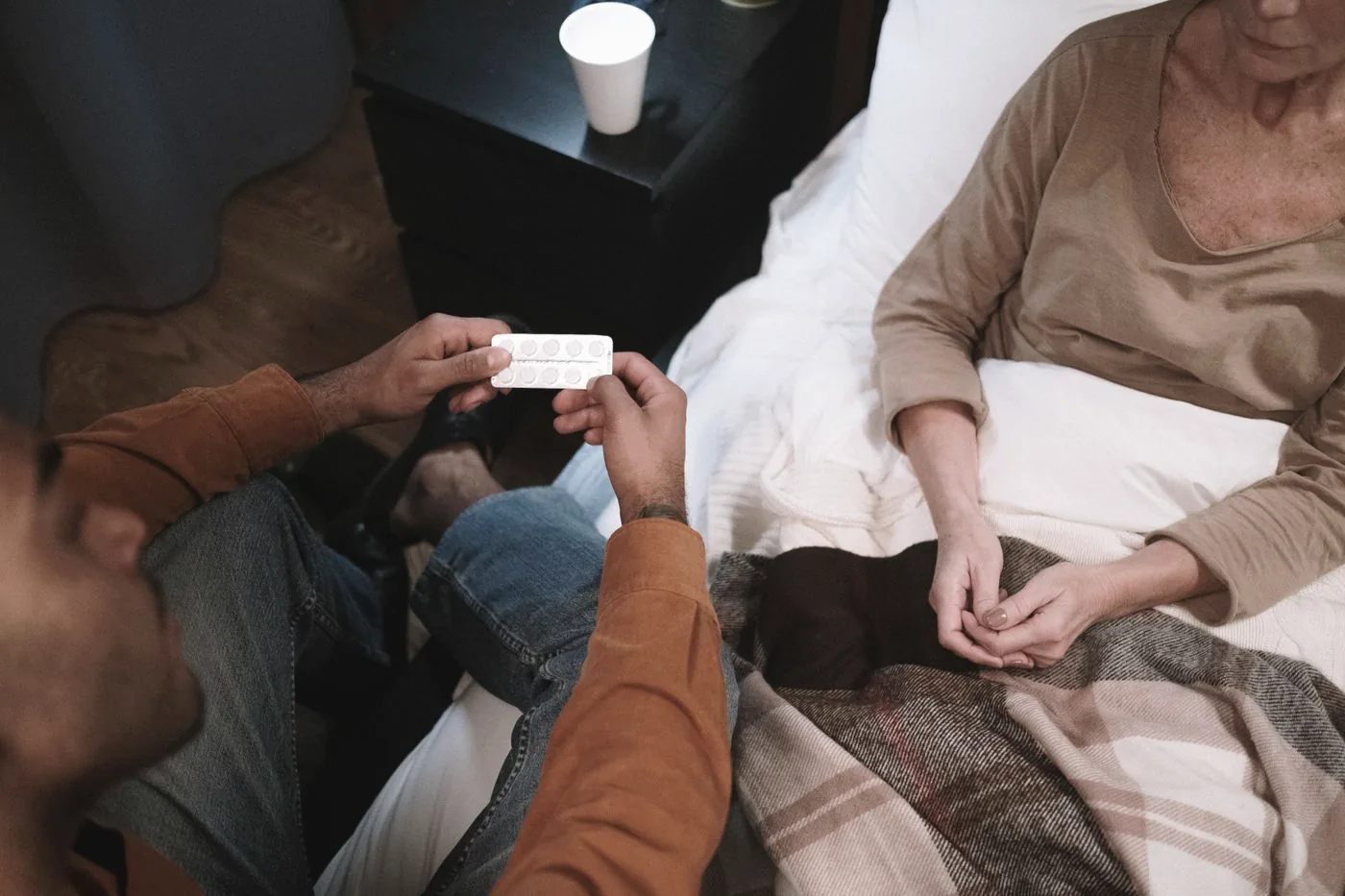
Medication errors are common and preventable. Use one master list, one pharmacy if possible, a pillbox and a written schedule. Never change a dose yourself. Today: reconcile every bottle against the discharge list, and put the list where everyone can see it.
Ask a nurse or therapist to show you once General safety guidance, not a substitute for hands-on training.
01Before you start
- Get the full list: name, dose, timing, purpose, and what to do if a dose is missed.
- Ask the pharmacist to check for duplicates and interactions, especially after a hospital stay.
- Use one pillbox or blister pack, and keep it out of reach of children and anyone with confusion.
02Do this
Make one master list
Write every medicine, including over-the-counter drugs, supplements, creams and eye drops. Add why it was prescribed. Keep a paper copy and a photo on your phone.
Reconcile the bottles
Put every bottle on the table and tick it against the list. Set aside anything expired, duplicated, or no longer prescribed. Ask the pharmacist before throwing anything away.
Tie doses to a routine
Link doses to meals, brushing teeth, or a phone alarm. Use the same words every time: “Morning pills, after breakfast.”
Record what actually happens
Note missed doses, refusals, side effects and the time they occurred. A simple notebook is enough. Bring it to every appointment.
Review at every change
After any hospital stay, new prescription or fall, ask for a full review. Bring all bottles to the pharmacist if that is easier than making a list.
03Do not do this
- Do not change a dose, stop a medicine, or crush a tablet without asking the prescriber or pharmacist.
- Do not use a shared pillbox for two people.
- Do not keep old antibiotics “for next time.”
- Do not hide medicines in food unless a pharmacist says it is safe.
Call a nurse or doctor if
- A dose was missed and the instructions say it matters, or a double dose was taken.
- New confusion, extreme sleepiness, a rash, swelling, bleeding, or trouble breathing.
- The person cannot swallow their essential medicines.
- You are unsure whether two medicines are duplicates.
04Printable checklist
- One master medication list, with purpose and timing
- Every bottle checked against the list
- One pharmacy and one pillbox
- A written plan for missed doses
- A symptom/side-effect log
- Emergency contact and after-hours number visible
Questions people ask
What if they refuse to take a medicine?
Can I crush tablets to make them easier to swallow?
How do I manage medications after a hospital stay?
Sources
- Managing Medicines in Care Homes (SC1) NICE · Accessed Nov 2026
- Medicines NHS · Accessed Nov 2026
- Patient Safety World Health Organization · Accessed Nov 2026
Was this page helpful?
Thank you. That helps us decide what to improve.
What's carrying the most weight
A short, private check of what care is taking out of you right now. It is not a diagnosis, and it will not tell you to “practice self-care.” It will show you which parts are heaviest, and give you a next step.