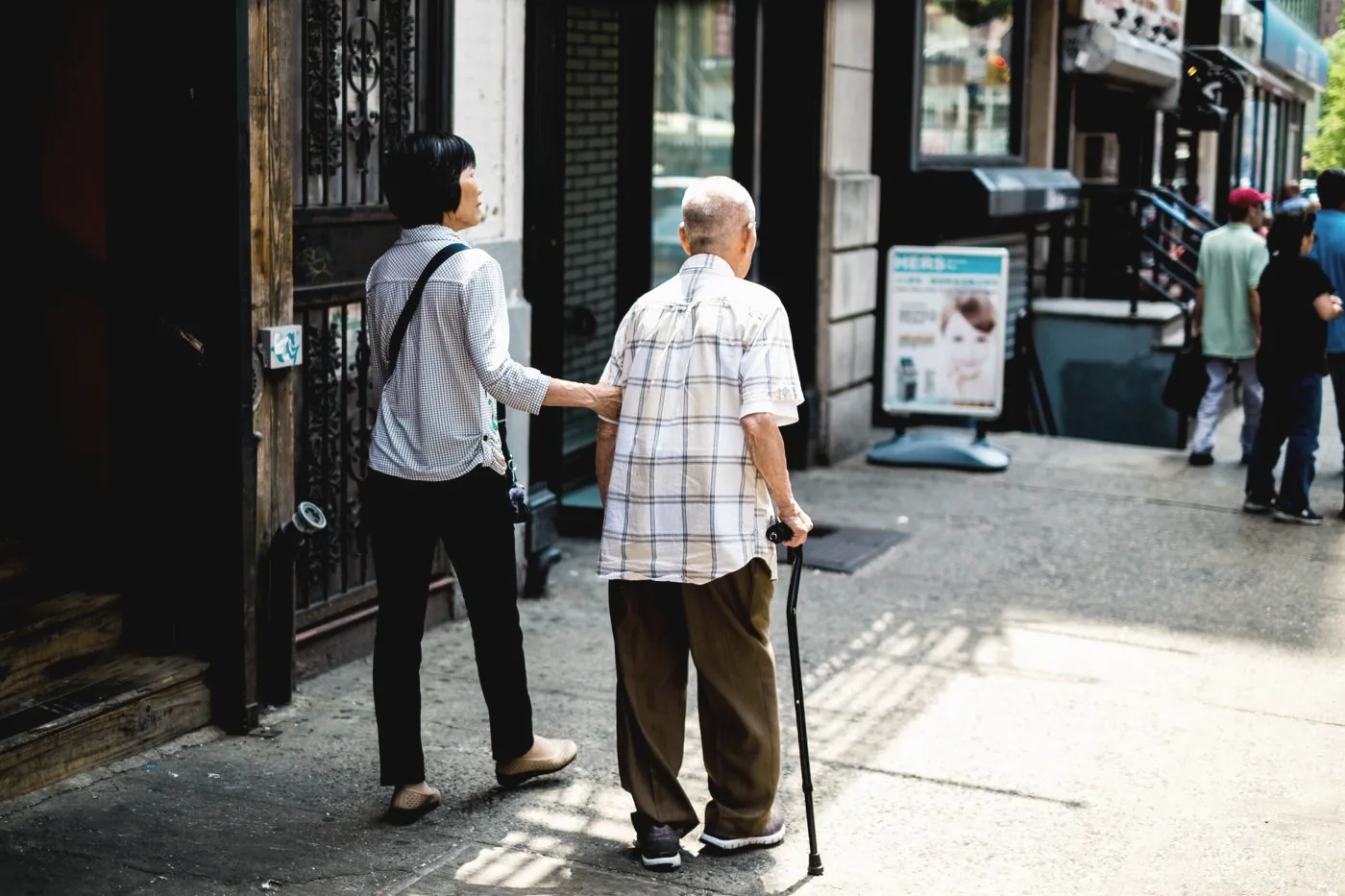
Most injuries happen during transfers. Do not lift with your back, and do not do it alone if you can avoid it. Ask a physiotherapist or OT to teach one safe method for this person and this room. Today: clear the path, raise the bed, and put on non-slip shoes.
Ask a nurse or therapist to show you once General safety guidance, not a substitute for hands-on training.
01Before you start
- Ask for a demonstration. A technique that works for one person may be unsafe for another.
- Check the equipment: bed brakes on, wheelchair locked, gait belt intact, slide board available.
- Explain what will happen and ask them to help as much as they safely can.
02Do this
Clear the path
Move cables, rugs and furniture. Make sure there is room for both of you and the equipment. Put the chair on the stronger side if one side is weak.
Prepare the person
Sit them upright at the edge of the bed with feet flat. Put on non-slip shoes. Ask them to lean forward, nose over toes, and use their stronger arm.
Use your legs, not your back
Bend your knees, keep the load close, and pivot with your feet. If a gait belt is advised, hold it from underneath, not by the clothing.
Pause before you move
Count to three together. Move on three, slowly. Stop if either of you feels unsteady, dizzy or in pain.
Settle and check
Lower them gently, check that the brakes are on, and ask how they feel. Do not walk away until they are stable and the call bell is within reach.
03Do not do this
- Do not pull them up by the arms or shoulders.
- Do not let them put their arms around your neck.
- Do not twist your body while holding their weight.
- Do not use a towel or sheet as a makeshift lift unless a clinician has taught you how.
Call a nurse or doctor if
- They cannot bear weight, have new leg or hip pain, or the leg gives way.
- They become dizzy, faint, breathless or confused during the transfer.
- You feel a sharp pain in your back or cannot safely hold them.
- A fall happens, especially with head injury or blood thinners.
04Printable checklist
- A technique demonstrated by a PT/OT for this person
- Gait belt, slide board or hoist checked
- Path clear, brakes on, non-slip shoes
- A agreed signal for “stop”
- Phone/call bell within reach after sitting
Questions people ask
Can I use a hoist by myself?
What if they are much heavier than me?
How do I protect my back long term?
Sources
- Falls and Falls Prevention National Institute on Aging · Accessed Nov 2026
- STEADI: Older Adult Falls Centers for Disease Control and Prevention · Accessed Nov 2026
- Caring for Someone After a Stroke Stroke Association (UK) · Accessed Nov 2026
Was this page helpful?
Thank you. That helps us decide what to improve.
What's carrying the most weight
A short, private check of what care is taking out of you right now. It is not a diagnosis, and it will not tell you to “practice self-care.” It will show you which parts are heaviest, and give you a next step.