Bathing is about dignity as much as hygiene. Plan for warmth, privacy, non-slip surfaces and a way to call for help. Today: set out everything before you start, check the water temperature, and decide what the person can do themselves.
Ask a nurse or therapist to show you once General safety guidance, not a substitute for hands-on training.
01Before you start
- Ask for an OT assessment if standing, stepping or sitting is unsafe.
- Set out towels, clothes, soap, and a chair before you start. Never leave to fetch something mid-bath.
- Check the water temperature with your wrist or elbow, and keep the room warm.
02Do this
Explain and ask
Say what you will wash and where. Ask what they want to do themselves. Offer a towel to cover the lap or chest.
Start with the face
Use a fresh cloth for the face, then move downward. Wash the back and feet last. Check skin folds and feet for redness or breaks.
Dry thoroughly
Pat dry, especially under breasts, in skin folds, between toes and in the groin. Moisture causes skin breakdown.
Check the skin
Look for new redness, bruising, rashes or swelling. Report anything that is spreading or painful.
Finish with dignity
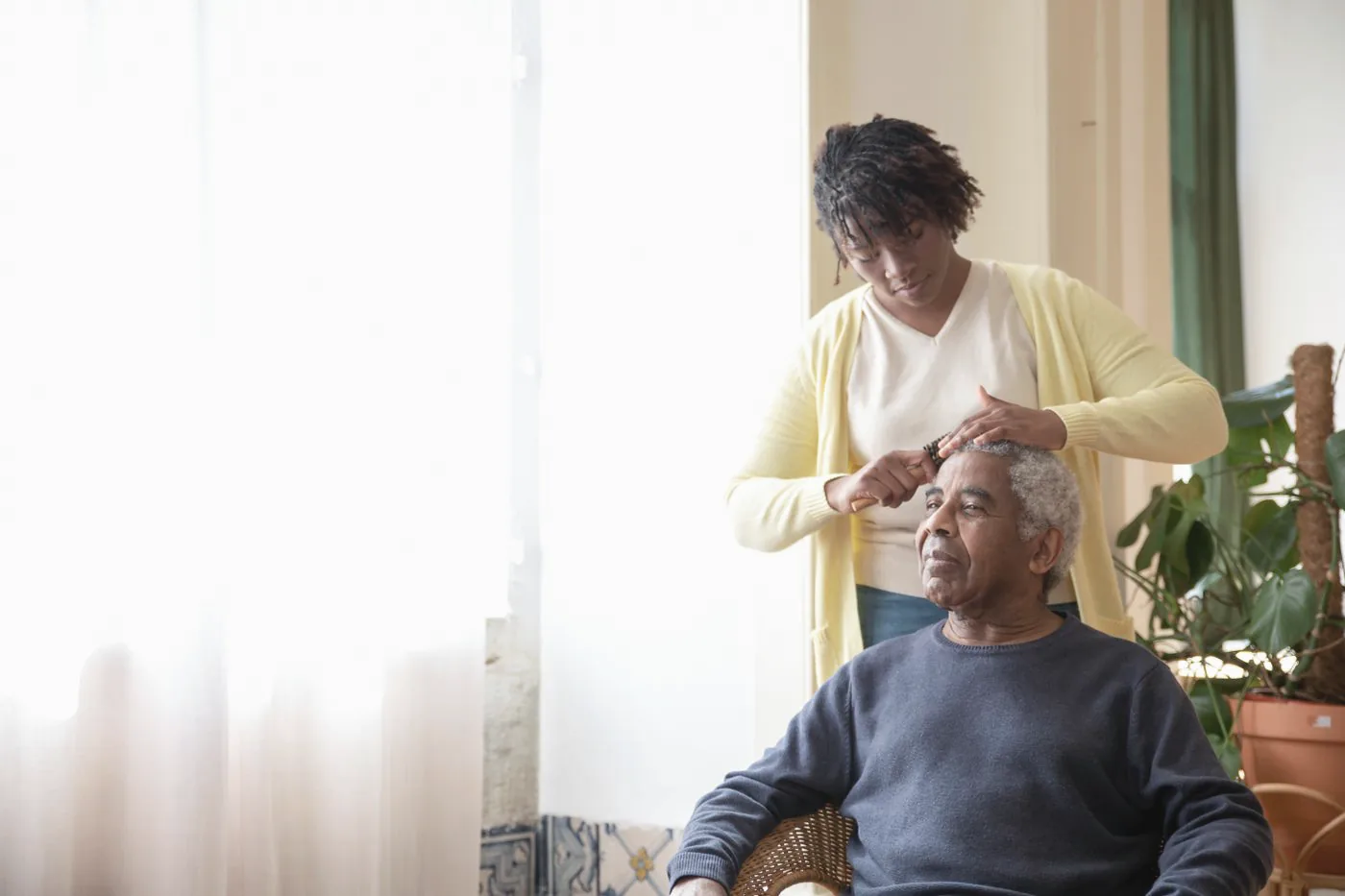
Help with lotion or barrier cream if wanted, then dress the upper body first. Offer a mirror, a comb, and a moment of privacy.
03Do not do this
- Do not leave someone alone in the bath or shower.
- Do not use very hot water or a space heater near water.
- Do not scrub fragile skin or use strongly scented products.
- Do not force a bath if the person is refusing; try a basin wash instead.
Call a nurse or doctor if
- Dizziness, chest pain, breathlessness or fainting.
- A fall, or a new inability to stand.
- Skin breakdown, a spreading rash, or a wound that smells.
- Confusion or agitation that is new.
04Printable checklist
- OT assessment for the bathroom
- Non-slip mat, grab bars, shower chair
- Everything within reach before starting
- Water temperature checked
- Skin check after drying
- A way to call for help
Questions people ask
How often should they bathe?
They are embarrassed. What do I say?
Can I use a shower chair?
Sources
- Washing and Bathing NHS · Accessed Nov 2026
- Caregiving National Institute on Aging · Accessed Nov 2026
- Falls Prevention Centers for Disease Control and Prevention · Accessed Nov 2026
Was this page helpful?
Thank you. That helps us decide what to improve.
What's carrying the most weight
A short, private check of what care is taking out of you right now. It is not a diagnosis, and it will not tell you to “practice self-care.” It will show you which parts are heaviest, and give you a next step.